Blog
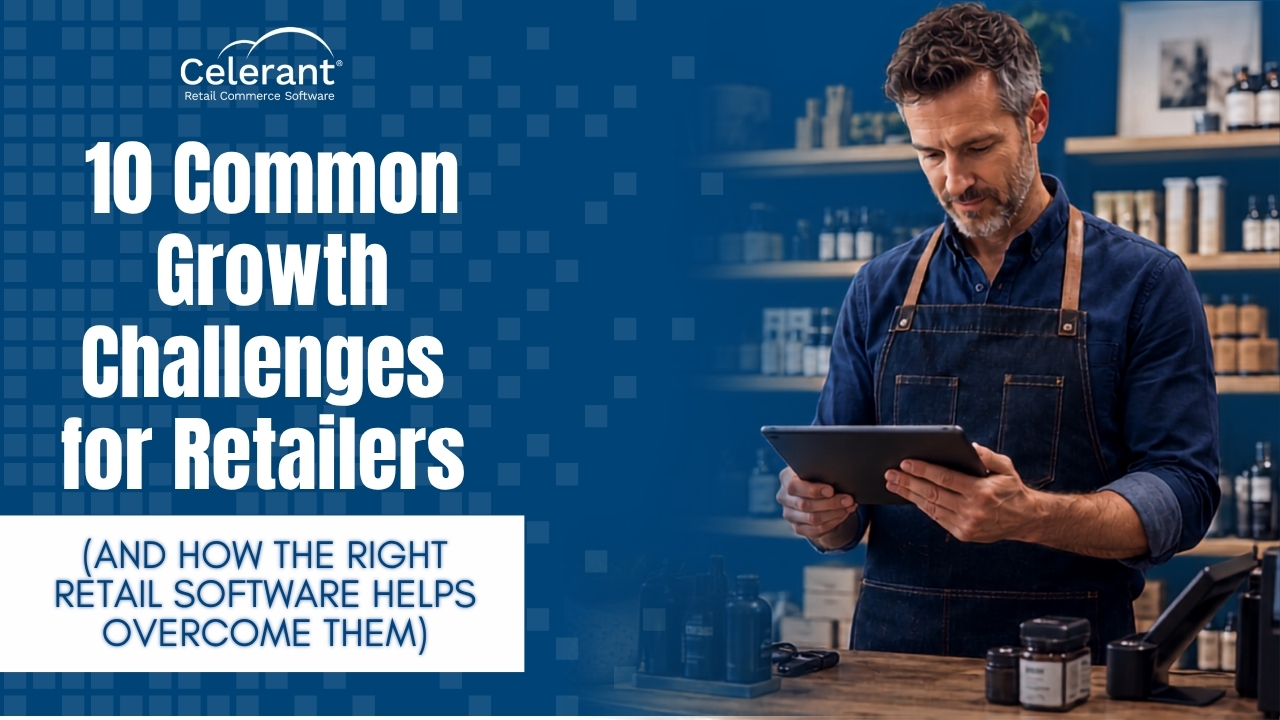
10 Common Growth Challenges for Retailers (and How the Right Retail Software Helps Overcome Them)
September 7, 2026 / 10+ minute read / By Muneeza Shahid
General, Inventory Management
Blog
Growing a retail business is more than just opening a new store or adding another sales channel. As retailers expand, they face operational challenges that can slow growth, affect customer experience, and increase costs. Inventory, orders, employees, and customer expectations all become more complex to manage as the business grows.
Customers today also expect a seamless shopping experience across physical stores and online channels, including eCommerce websites, marketplaces, and social media platforms. Without the right retail management solution, managing all these operations becomes increasingly difficult.
This guide explores the common growth challenges retailers face and how a modern retail management solution can help businesses expand more efficiently while maintaining profits and customer satisfaction.

Business growth brings new opportunities, but it also introduces operational complexity. Retailers must manage larger product catalogs, more customer data, additional sales channels, and increasingly complex day-to-day operations.
Managing inventory becomes more difficult across multiple locations. Administrative work increases as sales grow, and duplicate data is created because of disconnected systems. These issues can lead to delayed orders, frustrated customers, lower profitability, and reduced revenue. Reporting data also becomes scattered across multiple systems, making it harder for retailers to make informed business decisions.
To overcome these challenges, many retailers invest in retail management software. Retail management software automates routine tasks and provides a centralized view of the business, reducing the need to hire additional employees to manage repetitive processes manually.
Below are some of the most common retail growth challenges and how modern retail software helps overcome them.

Maintaining an accurate inventory across every sales channel is one of the primary challenges for growing retailers. Customers have multiple shopping options to purchase products, including physical stores, eCommerce sites, online marketplaces, social commerce platforms, and even mobile shopping apps. When these channels are not synchronized, retailers can experience several issues, including overselling, inaccurate inventory levels, canceled orders, and even poor customer experiences.
A modern retail solution helps update inventory automatically whenever a sale, return, transfer, or purchase order is processed. It also provides visibility across the business, enabling retailers to make informed purchasing decisions and ensure accurate stock availability across every channel.
Business expansion always introduces a new set of operational requirements. As retailers expand into multiple stores or sales channels, they must monitor store-specific inventory, employee permissions, transfers between locations, local promotions, and store analytics and reporting. When all these areas are addressed through separate systems or manually through spreadsheet work, the result is duplicate entries and inconsistent reporting.
With centralized cloud-based retail software, you get a single platform to monitor every location, compare sales performance across locations, and transfer inventory between stores to maintain consistent promotional offers and pricing across the entire business.
Most retailers use spreadsheets to track inventory, schedule purchases, and generate reports, even when their business has successfully scaled across multiple locations. This often results in duplicate data entries, more administrative tasks, inconsistent inventory, human errors, and reduced employee productivity.
Retail automation reduces repetitive work by automatically updating inventory, generating purchase orders, syncing online orders, processing returns, and producing business reports. Instead of spending time entering data, employees can focus on serving customers and growing the business.
Customer expectations are increasingly high due to the availability of multiple fulfilment methods, including everything from Buy Online, Pick Up In Store (BOPIS), Curbside Pickup, Ship-from-Store, endless aisle orders, flexible returns, personalized promotions, and loyalty rewards. However, these services need a connected retail system with synchronized inventory, customer, and order data in real-time.
Retail management solutions help businesses offer a consistent shopping experience, minimizing fulfillment delays and enhancing customer experience.
Retailers need reliable data to make informed business decisions. Many growing retailers struggle because their business data is spread across multiple disconnected systems. Managers have a hard time answering difficult questions, including the best-selling products, locations require stock purchasing, which promotional offers, employees, and the most valuable customers for the business.
Modern retail software combines business information into a single dashboard to provide real-time visibility into all the important retail systems, from sales and inventory to customer behavior and profitability. This leads to smart business planning and faster decision-making.
Purchasing inventory also becomes difficult as the product catalog expands. Retailers need to balance seasonal demand, supplier lead times, sales trends, safety stock, and cash flow. Ordering the wrong inventory quantity ties up cash flow, resulting in increased costs or missed sales opportunities.
A retail management solution automates purchasing using inventory, sales, customer behavior, and supplier information. This helps generate purchase recommendations that support healthier inventory levels.
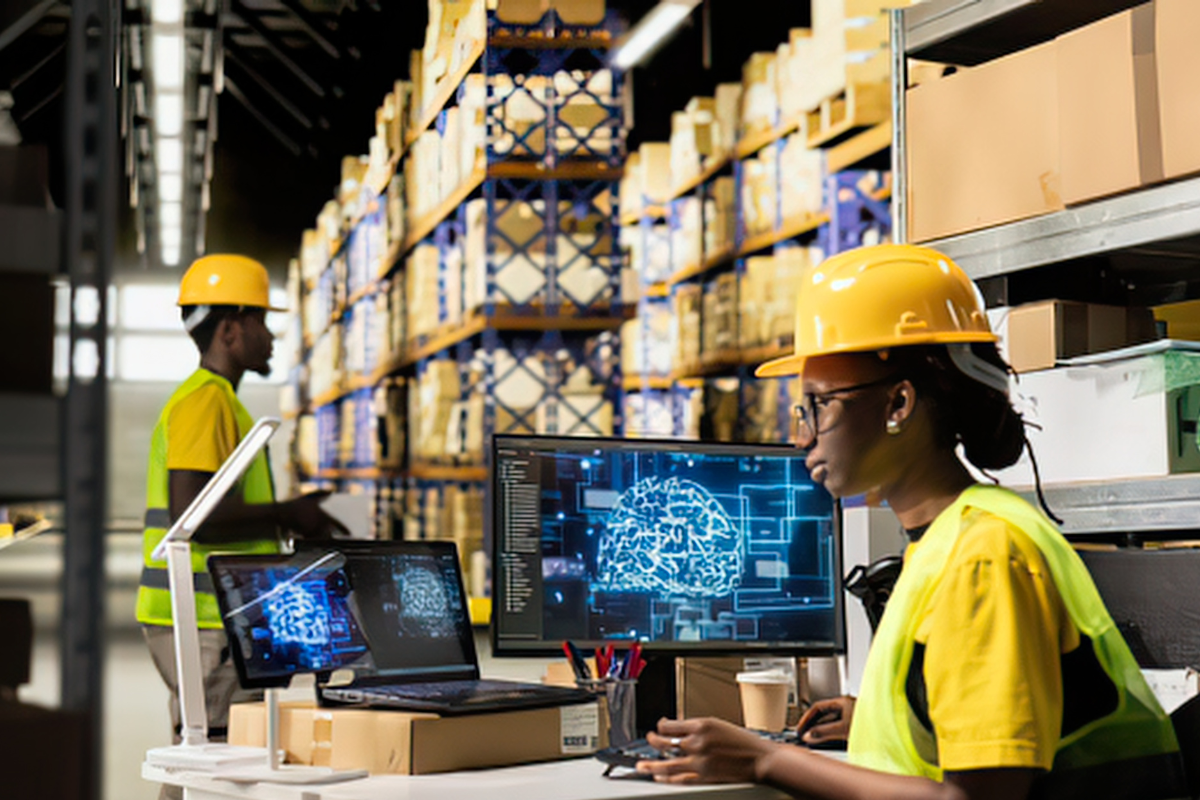
Most growing retailers use separate software for managing various retail operations, including Point of Sale (POS), eCommerce, accounting, CRM, shipping, warehouse management, and marketing.
Integrated retail software brings all business operations into a centralized system where everything from inventory, customer information, orders, and financial data is synchronized automatically, resulting in increased operational efficiency and reduced administrative work.
Business growth also means hiring more employees. This is why managers need to assign employee permissions, monitor individual performance, reduce transactional errors, and improve accountability.
Retail software also enables managers to assign role-based permissions, monitor employee activity, review sales performance, and maintain operational control across multiple locations.
Acquiring new customers is generally more expensive than retaining existing ones. This is why, as retailers expand, they must focus on building long-term customer relationships with their brand through personalized marketing campaigns and loyalty strategies.
Retail software includes integrated CRM and loyalty features that help businesses track purchase history, reward repeat customers, personalize marketing campaigns, strengthen loyalty programs, and improve customer lifetime value.
Improving customer engagement leads to repeat purchases and improves long-term loyalty.
Retailers need a solution that helps them scale their business for long-term growth rather than focusing solely on the current challenges. Retail software should support new store locations, expanded online sales channels, larger product catalogs, higher transaction volumes, additional employees, and new customer services as the business grows.
Selecting the right software not only minimizes the need for costly system replacements but also scales with a business as it continues to grow.
Business growth must create new opportunities rather than operational bottlenecks. As retailers continue to expand, managing these operational challenges manually becomes increasingly difficult.
Retail management software such as Celerant helps retailers streamline inventory management, centralize in-store and online operations, automate day-to-day tasks, and provide real-time visibility into important business metrics.
This helps retailers manage retail operations, including inventory, orders, customers, purchasing, and reporting from a single store to multiple locations and online sales channels through a single dashboard. This leads to improved operational efficiency, reduced manual work, more sales, and better business growth.
The most common challenges retailers face include managing inventory across multiple locations and sales channels, manual procedures, integrating disconnected systems, employee management, and meeting increasingly high customer expectations.
Retail software consolidates all the business operations under one system by synchronizing data and automating repetitive tasks. This provides real-time reporting and enhances operational efficiency, making scaling possible for retailers.
Retailers should consider an upgrade when manual processes result in inventory inaccuracies, increased administrative work due to manual processes, expansion into multiple locations and sales channels, and the existing systems are unable to provide the visibility needed to support continued growth.
Absolutely. Automating routine tasks leads to improved inventory accuracy, reduced manual data entry, and seamless workflows, which lower labor costs, minimize inventory losses, and enhance overall operational efficiency.