Blog
How to Dominate the 2025 Holiday Shopping Season
November 7, 2025 / 6 minute read / By Nick Borowitz


Blog
Historically, it accounts for at least 40% of annual revenue, and that hasn’t changed. What has changed is the environment in which retailers are operating.
In 2025, economic uncertainty is the backdrop to everything. Inflationary pressures, fluctuating supply chains, and shifting consumer confidence have created a cautious shopper. According to Salsify, 53% of shoppers plan to spend the same as last year, 22% plan to spend more, and 18% plan to spend less.
Gen Z is leading the charge on increased spending, with 29% saying they’ll pay more. At the same time, millennials are more conservative, with only 18% planning to reduce their holiday spending.
These observations tell us two things:
And to highlight how retailers can better prepare for this holiday season in every category of retail and against their competition, we’ll break down the key things to keep in mind when planning for a successful 2025 holiday season!
Holiday 2025 isn’t about waiting for customers to show up. It’s about creating the conditions where they choose you over every other option.
Retailers inundate the customer’s phone with countless ads during the holiday rush. The average consumer receives marketing messages per day.
During the months of November and December, that number increases significantly. The retailers who win aren’t the ones shouting the loudest; they’re the ones delivering the most relevant, personalized messages at the right time.
Think about it: if you’re a hobby retailer, why promote Magic: The Gathering to a customer who’s only ever purchased Warhammer? If you’re a sporting goods retailer, why push ski gear to someone who lives in Florida? The scattershot approach doesn’t just waste money & time: it erodes trust and destroys patience.
That’s where more innovative digital marketing comes in. Instead of a bullet list, here’s a table of actionable digital marketing tactics for 2025:
| Tactic | Why It Matters | How to Execute |
|---|---|---|
| AI-driven segmentation | Cuts through noise with personalization | Utilize POS and CRM data to target customers by brand preference, purchase history, or category. |
| Dynamic promotions | Keeps you competitive in real time | Adjust offers based on competitor pricing and shopper behavior. |
| Omnichannel consistency | Builds trust and avoids confusion | Align promotions across email, social, eCommerce, and in-store. |
| Abandoned cart recovery | Recaptures lost revenue | Trigger remarketing emails/SMS within hours, not days. |
| Social proof campaigns | Influences cautious buyers | Highlight reviews, UGC, and peer recommendations. |
The key here is alignment. Your digital marketing strategy can’t live in a silo. It must connect directly to your POS, inventory, and eCommerce platform. That way, when you send a promotion, you know the product is in stock, the price is accurate, and the customer journey is seamless.
Don’t just send more emails, send smarter ones that are well thought out and written to convey a message with meaning. Utilize AI-driven segmentation to target customers based on their brand preferences, purchase history, or category. A smaller, more relevant list will almost always outperform a massive, generic blast.

Let’s be real: the risks this year aren’t abstract. They’re right in front of us. Inventory delays can derail even the best promotions. Competitors are more aggressive than ever, with flash sales and price matching.
And shoppers, armed with mobile devices, are checking your prices against those of other retailers while browsing your aisles.
The danger isn’t just losing a single sale; it’s losing trust. If your in-store price doesn’t match your eCommerce site, or if your system glitches during checkout, customers won’t hesitate to walk away. In a season where every transaction counts, those small cracks can become significant losses.
Retailers who treat these dangers as “just part of the season” are the ones who end up with excess inventory, frustrated customers, and disappointing year-end numbers. Those who prepare for and anticipate these challenges and build systems to handle them are the ones who thrive.
Inventory planning has always been a cornerstone of holiday success, but in 2025, it’s more critical than ever.
Supply chain disruptions are no longer rare events; they’re part of the landscape. Whether it’s shipping delays, raw material shortages, or unexpected spikes in demand, retailers must plan early and build flexibility into their strategies.
Here’s what innovative retailers are doing:
Consider this: in 2016, total retail sales increased by 7.9% during the holiday season, with eCommerce surging 20%. That growth was fueled by retailers who had the right products in the right place at the right time. In 2025, the stakes are higher, but the principle is the same.
Build redundancy into your supply chain. Have a backup vendor for your top‑selling items, and stock essentials early. Flexibility is the difference between selling out and missing out.
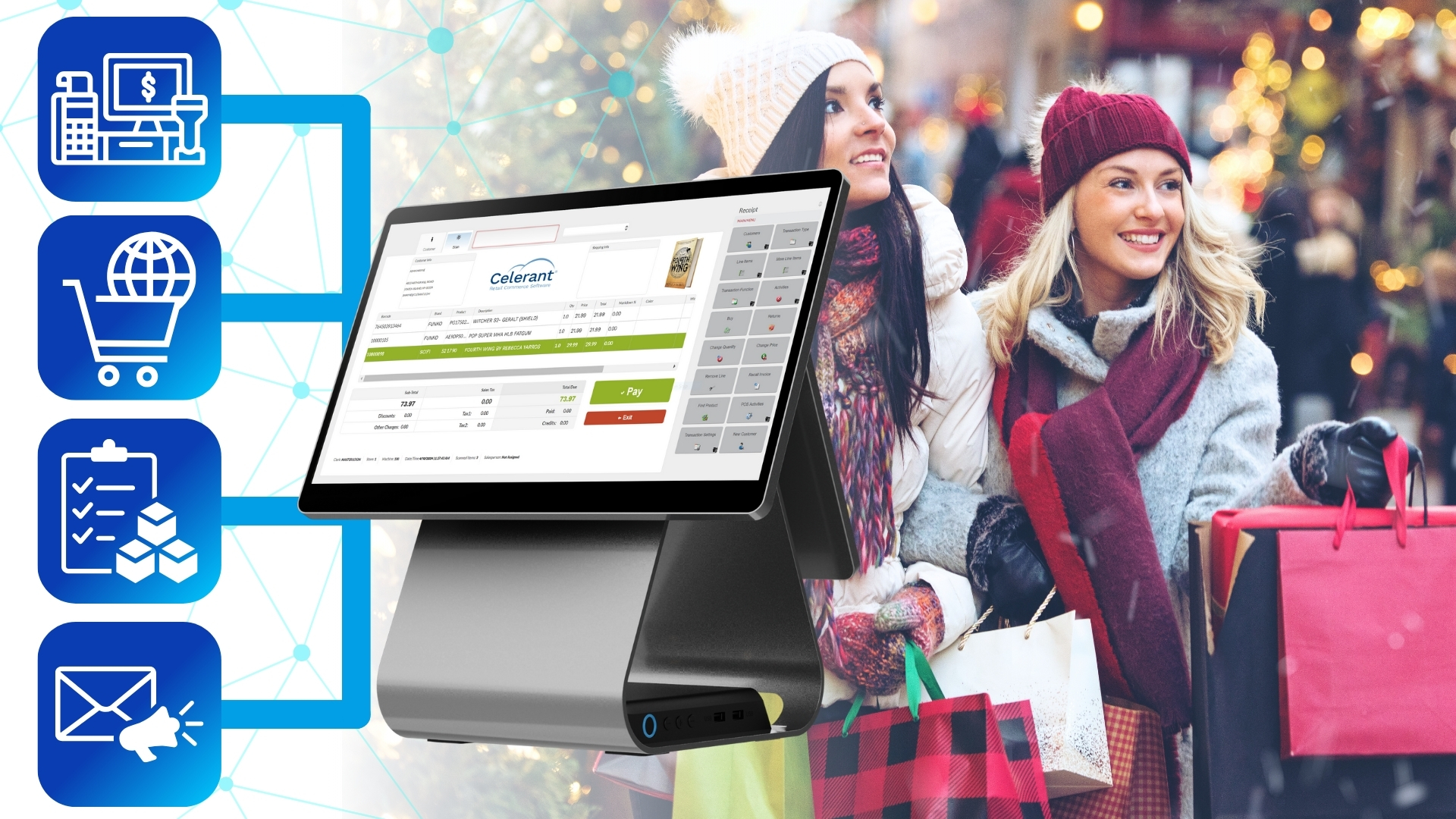
Your technology is the backbone of your holiday season. Outdated systems, lagging updates, or disconnected platforms can cost you sales at the worst possible moment. Imagine a customer ready to check out, only to have your POS freeze. Or a shopper who finds a promotion online, but your in-store system doesn’t recognize it. Those moments don’t just lose sales, they lose customers.
Before the rush hits, ensure:
This preparation isn’t just about avoiding disasters. It’s about creating confidence. When your systems run smoothly, your staff can focus on serving customers instead of troubleshooting. And your customers feel that confidence, which translates into loyalty.
Nothing frustrates a customer faster than seeing one price online and another in-store. In 2025, with shoppers comparing in real time, alignment is non-negotiable.
Audit your promotions across all channels to ensure consistency. Even a $1 discrepancy can prompt a customer to switch to your competitor.
This is where having a unified retail technology platform pays off. When your POS, eCommerce, and marketing systems are connected, you can update pricing once and know it’s reflected everywhere. That consistency builds trust and trust drives sales.
Let’s put this in perspective:
The takeaway? Growth is still on the table, but it will go to the retailers who prepare, personalize, and execute flawlessly.
Learn More: 5 Facts About Online eCommerce for Retailers
Holiday 2025 won’t reward the loudest retailers. It will reward the smartest. Those who plan their inventory early, align pricing across channels, invest in digital marketing precision, and keep their systems running smoothly will capture cautious shoppers and turn uncertainty into an opportunity.
The holiday season has always been high stakes. However, in 2025, with economic uncertainty and heightened competition, the margin for error is razor-thin.
The good news? With the right strategy and the right technology partner, you can not only survive, you can dominate.