Blog
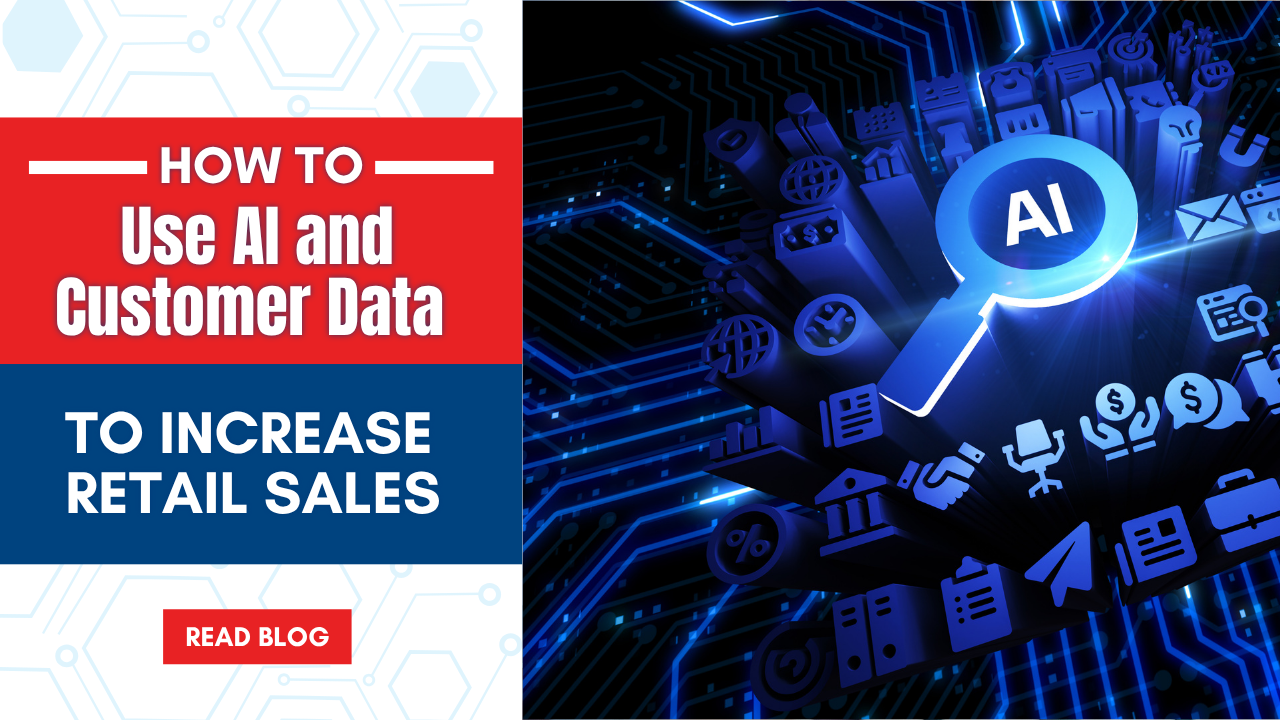
How to Use AI and Customer Data to Increase Retail Sales
September 18, 2026 / 10+ minute read / By Muneeza Shahid
Artificial Intelligence, General, Inventory Management
Blog
Artificial intelligence is shaping the way retailers think about customers, personalizing marketing and business decisions. It enables retailers to create actionable insights based on customer shopping trends and automates communication channels. But AI is only as effective as the data behind it.
The real game begins by combining AI with accurate and centralized customer data. Retail metrics such as purchase history, loyalty activity, customer profiles, inventory, and website interactions reveal customer preferences and peak shopping hours, helping retailers deliver relevant shopping experiences.
Retail data, including purchase history, loyalty activity, customer profiles, inventory, and website interactions, reveals customer preferences and peak shopping times, helping retailers deliver more relevant experiences.
They can take promotional campaigns one step further by combining these metrics with marketing and customer engagement tools. This would increase new and repeat sales by building a strong customer connection.
This guide covers:
Every customer interaction generates data. Whether a customer orders in-store, browses online through an eCommerce website, earns loyalty points, abandons an online cart, sends an email response, or engages via social media, each interaction provides valuable information. However, retailers can gain a complete picture of a customer journey only by connecting these interactions.
AI can help retailers analyze large volumes of data to identify useful patterns. For example, a retailer may struggle to create an effective personalized campaign if the customer’s purchase history is incomplete or spread across disconnected systems.
This makes AI an important component of a broader data-driven customer engagement strategy. The goal isn’t only to integrate AI into the marketing process. It is to use accurate retail data to improve marketing, automate manual processes, and create relevant opportunities to drive sales.
Personalized marketing is one of the most effective ways to use customer data to boost sales. Rather than sending the same promotional message to every shopper, retailers can use customer data such as purchase history, shopping frequency, loyalty activity, and product preferences to target the most relevant customer segments.
For instance, a sporting goods retailer needs to identify customers who frequently buy running shoes to promote running apparel, footwear, and accessories to that audience. Similarly, a pet retailer can identify customers who frequently buy dog food to target promotional offers around grooming products, treats, and toys.
These campaigns are more relevant because they are based on actual customer behavior rather than assumptions about what every shopper wants.
Looking for a way to connect customer data in one place? Celerant’s Customer Engagement Suite (CES) connects marketing with retail data, including customer and transaction information, to help retailers create more targeted campaigns based on real shopping behavior. Celerant’s CES supports personalized email and SMS marketing and can automate campaigns based on actions such as purchases, loyalty activity, and abandoned carts.
Personalization starts with understanding that different customers have different needs. Customer segmentation allows retailers to divide their audience into meaningful groups based on factors such as purchase behavior, engagement, and loyalty status.
Common retail customer segments include first-time and returning customers, high-value shoppers, loyalty members, cart abandoners, promotion-responsive customers, and inactive customers.
A first-time customer may receive a welcome email campaign or loyalty invitation, whereas a long-term customer may receive early access to a new collection. Similarly, a customer who hasn’t purchased in the last 3 months may receive a re-engagement campaign rather than the same promotional emails sent to active customers.
This creates a more relevant marketing strategy by tailoring communications to each customer’s relationship with the retailer.
Many retailers manually monitor customer interactions and respond to them as they occur. But they don’t have to monitor every interaction manually. Marketing automation allows them to respond to customer behavior automatically. For example, retailers can build automated campaigns around purchases, abandoned carts, loyalty milestones, customer inactivity, product promotions, and follow-ups.
Let’s take an example of an abandoned cart. Without automation, retailers need to identify abandoned carts and manually create follow-up campaigns. But with an automated workflow, the system responds to the customer action to trigger an appropriate message. This helps retailers engage with relevant and potential customers for shopping.

Loyalty programs not only reward customers for their purchases, but also generate information about customer preferences, purchasing frequency, and engagement. This helps to create campaigns around milestones, rewards, special offers, and personalized promotions.
For instance, a retailer can send an automated reminder about the available rewards to the relevant customers.
Celerant’s Customer Engagement Suite connects loyalty and retail data with marketing capabilities, helping retailers create more timely and relevant communications with their customers.
Customers engage with retailers through multiple sales channels. For example, they browse a product online, visit a physical store to purchase it, and then place another order online weeks later. When each channel operates separately, retailers are unable to grasp the complete customer journey.
A unified retail system connects all these interactions to avoid treating existing customers like first-time shoppers when they engage through a different channel.
Celerant’s retail platform connects POS, eCommerce, customer, inventory, and other retail data, providing a centralized foundation for managing customer engagement across channels.
Retail marketing revolves around different communication channels, including email, SMS, social media, and review platforms. Managing each channel separately can create fragmented workflows and make it harder for retailers to maintain a consistent view of customer engagement.
An AI-automated customer engagement tool brings email, SMS, social media management, live chat, and online reviews under one centralized marketing platform. This enables retailers to have a central marketing dashboard for customer communication rather than switching between multiple disconnected systems.
Celerant’s retail software users can benefit from CES, which is directly connected to the retail data to empower businesses.
Disconnected marketing systems often require customer lists to be exported, imported, and synchronized between platforms. This may create a gap for outdated or incomplete information to enter the marketing process.
A customer may have placed an order since the last customer list was exported. Their purchase history, loyalty activity, or other customer information may have changed in the meantime.
When a unified retail solution is connected with an AI-based customer engagement system, it gives access to real retail data from POS solutions and eCommerce systems. This also helps to automate customer lists rather than manual exports, allowing retailers to build campaigns around customers’ shopping patterns.
Customer engagement happens when shoppers are interested in making a purchase. When browsing online, customers may have questions about a product, need help selecting between two options, and want additional information before completing checkout. Live chat helps retailers engage with shoppers during the decision-making process.
An AI-based customer engagement solution enables retailers to communicate with customers directly through live chat. This helps customers move closer to a purchase while creating an assisted digital shopping experience similar to the support they receive in a physical store.
Location-based marketing helps retailers engage with customers based on where they are. Retailers with physical locations can connect digital marketing with in-store engagement by creating targeted campaigns for customers in specific geographic areas.
For example, retailers can promote an in-store event, product launch, or seasonal promotion to customers near a particular location. These campaigns can encourage customers to visit a store or engage with a promotion when they are most likely to respond.
This approach helps retailers connect digital engagement with physical store visits and create more relevant local marketing experiences.
Retailers need to understand how their marketing contributes to business results. This is easier when marketing and retail data are connected, giving retailers a clear picture of campaign performance, sales, and customer activity.
A customer engagement solution connects marketing activities with sales data, helping retailers evaluate campaigns based on actual retail performance. For instance, they can use customer behavior to create a targeted campaign, which may lead to a purchase. They can then evaluate the entire process through performance analysis to improve the next campaign.
This creates a continuous marketing feedback loop to edit future campaigns and improve shoppers’ engagement over time.
AI helps retailers analyze and create new opportunities. But it is possible only when all customer data is connected through a unified retail system. When customer profiles, purchase history, loyalty activity, POS, eCommerce, inventory, and marketing data work together, retailers have a stronger foundation for understanding customer behavior and creating more relevant engagement.
The goal isn’t to send more marketing messages. It’s to make each message more relevant and focused on the right customers.
Celerant’s Customer Engagement Suite helps retailers connect retail data with email, SMS, social media, online reviews, and live chat from a centralized platform. This allows retailers to manage customer engagement while keeping marketing connected to their broader retail operations.
When retailers connect marketing with the retail data that powers their business, they can:
Want to connect your marketing and retail data? Celerant’s Customer Engagement Suite can help.
How can AI increase retail sales?
AI helps retailers increase sales by assessing customer behavior, checking purchasing patterns, supporting personalized marketing, building insights, and helping teams make informed decisions. Its effectiveness is based on the availability and quality of the underlying retail data.
How can customer data help increase retail sales?
Customer data enables retailers to identify purchasing behavior, customer preferences, loyalty activity, and shoppers’ engagement. Retailers use these insights for customer segmentation, to personalize promotions, recommend relevant products to re-engage inactive shoppers, and encourage repeat purchases.
What is customer engagement in retail?
Customer engagement in retail means interactions between customers and retailers across different sales channels, including websites, SMS, email, live chat, and loyalty programs. The goal is to create relevant and timely experiences throughout the customer journey.
What is retail marketing automation?
Retail marketing automation is about automating software to execute customer communications based on customer actions and predefined triggers. Examples include abandoned-cart messages, post-purchase communication, loyalty notifications, and re-engagement campaigns for inactive customers.
How does Celerant CES personalize retail marketing?
Celerant CES directly connects with POS and eCommerce data, including customer profiles, transactions, inventory, and loyalty activity. Retailers use this information to segment audiences, target email and SMS, and automate marketing campaigns according to customer behavior.
What marketing channels does Celerant CES support?
Celerant CES combines all the marketing channels, including email, SMS, social media management, live chat, online review management, marketing automation, and geo-fencing/push notifications, under one platform.
Can Celerant CES automate customer engagement?
Absolutely. CES offers automated campaigns based on customer activities such as purchases, loyalty activity, and abandoned carts. Retailers also use location-sensitive triggers for geo-fencing and push notifications.
How is Celerant CES different from standalone marketing platforms?
CES is a built-in feature of Celerant’s retail software and doesn’t operate as a separate marketing platform that retailers need for synchronizing data between systems. It combines marketing with POS, inventory, eCommerce, customer, transaction, and loyalty programs into a single dashboard.
Can retailers measure marketing performance with Celerant CES?
Yes. Celerant CES provides marketing and engagement tools that help retailers track campaign activity while connecting marketing with their broader retail data. This gives retailers a more complete view of campaign performance than relying solely on engagement metrics such as email opens and clicks.