Blog
How to Use Google Trends to Create a Sales and Marketing Strategy
January 12, 2026 / 6 minute read / By Zoya Naeem
Digital Marketing, eCommerce, General

Blog
Retailers sit on more data than ever, but one of the most overlooked signals happens long before a shopper lands on your site or walks into your store.
It starts with a search.
What customers type into Google reveals real demand, shifting seasonality, brand curiosity, and often clear buying intent. When you pay attention to that behavior, marketing and sales decisions stop being guesses and start being informed moves.
In this guide, we walk through four practical ways retailers can use Google Search data and Google Trends to make smarter decisions across marketing, merchandising, and sales. Whether you sell online, in store, or both, these insights can help you align what you promote, stock, and publish with what customers are already looking for.
Here’s a quick look at what we’ll cover:
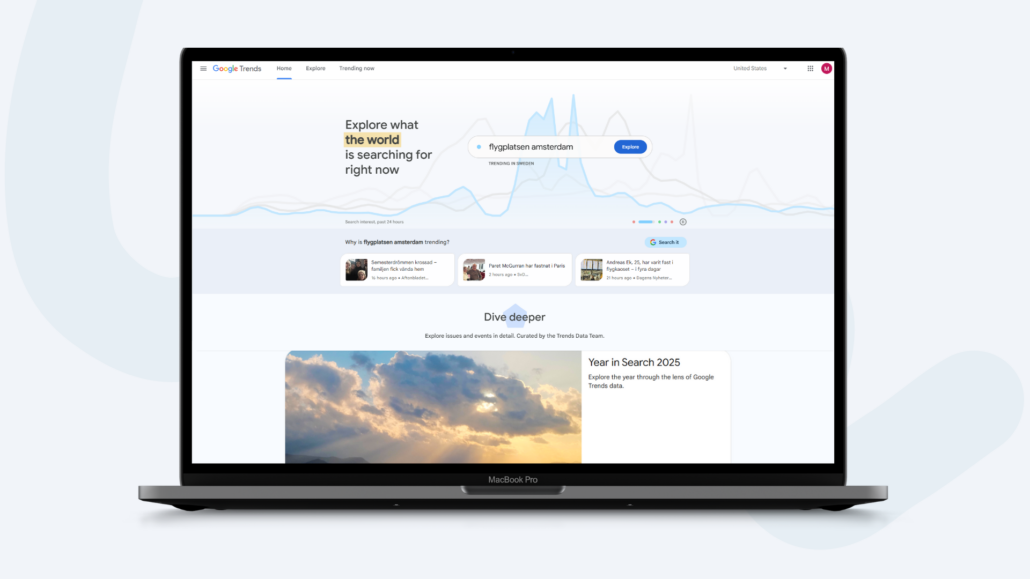
Once you start looking at search data, the first thing it helps clear up is a simple but important question. What are shoppers actually looking for right now? Not what feels popular on the sales floor. Not what performed well last year. What people are actively searching for today.
Google Trends lets retailers zoom out and look at demand across an entire category. For example, if you sell outdoor gear, you might compare topics like camping tents, hiking backpacks, portable grills, and coolers. Using topics instead of single keywords matters here because topics roll in related searches, variations, and even misspellings. You get a clearer picture without having to guess every possible term a shopper might type.
When you line products up side by side, patterns show up fast. Some items steadily grow in interest year over year. Others spike hard for a few months and then cool off. And some quietly fade, even if they are still sitting on your shelves. That kind of visibility helps retailers make smarter calls about what deserves more attention and what might be taking up space without pulling its weight.
This insight applies directly to how you manage your business day-to-day. It can guide which products you feature online, which categories you expand in-store, and how you plan inventory ahead of seasonal demand.
It also helps shape marketing content decisions. If search interest for patio furniture climbs every spring, that is your cue to publish buying guides, refresh category pages, or highlight product comparisons before shoppers start browsing elsewhere.
Search insights are only useful if you can act on them. Retailers get the most value when product data, inventory, and content planning live in one connected system. That way, trend signals can actually turn into updated assortments, smarter stock levels, and timely content instead of living in a spreadsheet no one revisits.

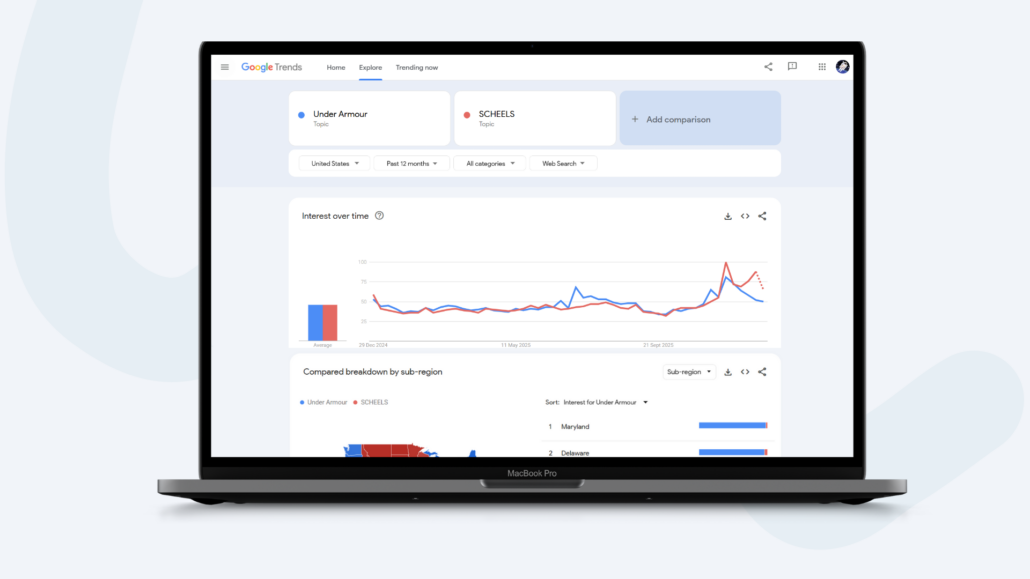
Once you understand what customers are searching for within your category, the next natural step is to look outward. Search visibility is competitive by nature, and Google Trends gives retailers a simple way to understand how their brand stacks up against others over time.
By comparing your brand name to a few key competitors in Google Trends, you can see relative demand and awareness at a glance. This helps you spot patterns. You may notice a competitor gaining traction in certain regions, or see that interest in your brand is stronger in some markets than others. All these insights can be incredibly useful when deciding where to focus local promotions, store expansion, or regional marketing efforts.
Scrolling deeper into the data often reveals even more opportunity. Related topics and queries can show which products, services, or themes people commonly associate with your competitors. Sometimes this surfaces gaps you did not realize existed. Maybe shoppers are searching for a product category you carry but have not highlighted. Or maybe there is an educational angle your competitors are leaning into that you have not explored yet.
For retailers, this kind of benchmarking helps with creating a marketing plan, guiding localized campaigns, and shaping content strategies that meet customers where interest already exists.
The goal is not to copy what others are doing, but to understand where demand is forming and decide how you want to show up in those moments.
Competitive insights become far more useful when they are paired with real performance data. Having unified reporting across in-store sales, ecommerce, and marketing makes it easier to connect search interest to actual outcomes. With tools like Stratus Analytics, retailers can keep a clear pulse on what is happening across every channel and use those insights to make smarter, more confident decisions.
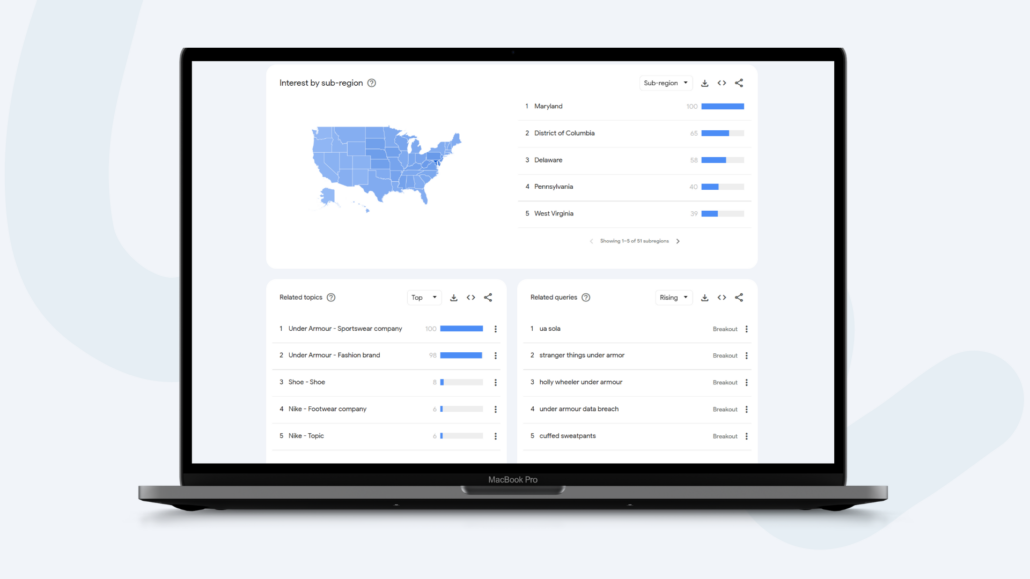
Once your brand starts to grow, your customers are not just searching for products anymore. They’re searching for you. Google Trends makes it possible to track brand interest over short windows like the last 30 or 90 days, which is often where the most useful signals live.
By reviewing related and rising searches tied to your brand name, you can see how people actually talk about you in their own words. Sometimes that shows up as product questions. Other times, it is tied to store locations, services, or experiences. These patterns can quickly reveal what customers are curious about, confused by, or excited about at the moment.
It is also worth toggling over to YouTube search data. Customers often head to video when they want explanations, comparisons, or reassurance before buying. That insight can guide how you approach education across your site, not just marketing.
From a retail perspective, this kind of awareness data is efficient as it can influence FAQ sections, product descriptions, on-site messaging, and even how your staff discusses products in-store. When the language customers use in search matches what they see on your site, everything feels easier and more trustworthy.
Search data is just as useful for paid campaigns as it is for organic content. Instead of guessing which keywords to bid on or promote, Google Trends lets you pressure test those ideas before you spend a dollar. A smart place to start is with the keywords that already drive revenue for your business. These are the terms customers are actually converting on.
From there, Google Trends helps you zoom out. You can see whether interest in a keyword is steady, seasonal, or quietly fading. You might notice that a term spikes every spring, dips in the summer, or has been slowly losing momentum year over year. This helps you time campaigns better and avoid pushing promotions when demand simply is not there.
Trends also surface related and rising topics that can open new doors. For example, a retailer advertising a core product may discover growing interest in accessories, bundles, or use-case-driven searches that were never part of their original plan. Those insights can shape both the ad copy and the supporting content on your site, so customers land on pages that feel relevant to their search.
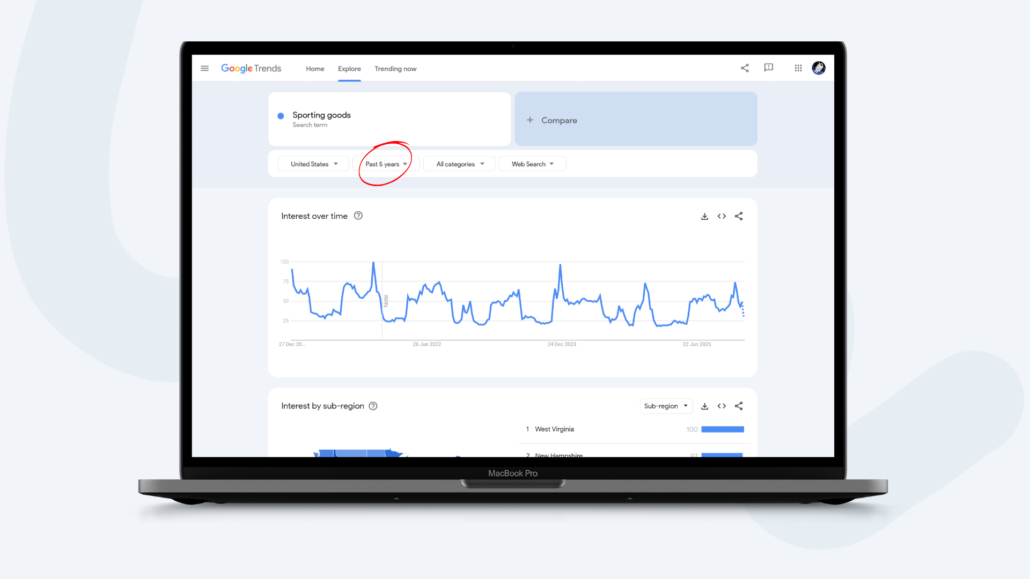
This approach also reduces wasted spend on keywords that peak at the wrong time and helps uncover adjacent opportunities that customers are already curious about. When your ads, category pages, and product content all reflect real search behavior, performance improves because you are meeting shoppers where they already are.
Search data has a way of cutting through the noise. It shows you what customers are curious about, what they are actively comparing, and when interest is rising or cooling off. When retailers use those signals to guide product planning, content, and campaigns, decisions start to feel a lot more grounded.
But insights can only go so far if they live in a spreadsheet. You can get the most value from search data when you pair it with systems that make acting on those insights easier. Tools that support all your marketing channels, such as email and SMS campaigns, reputation management, and reporting, in one place can help close the gap between knowing and doing.
And that’s exactly where our Customer Engagement Suite (CES) can be of help.
If you’re ready to turn search behavior into smarter marketing and stronger sales, explore how CES helps you put those insights to work.