Blog
Retail Challenges You Can’t Control (And the Ones You Can)
July 20, 2026 / 10+ minute read / By Muneeza Shahid
General
Blog
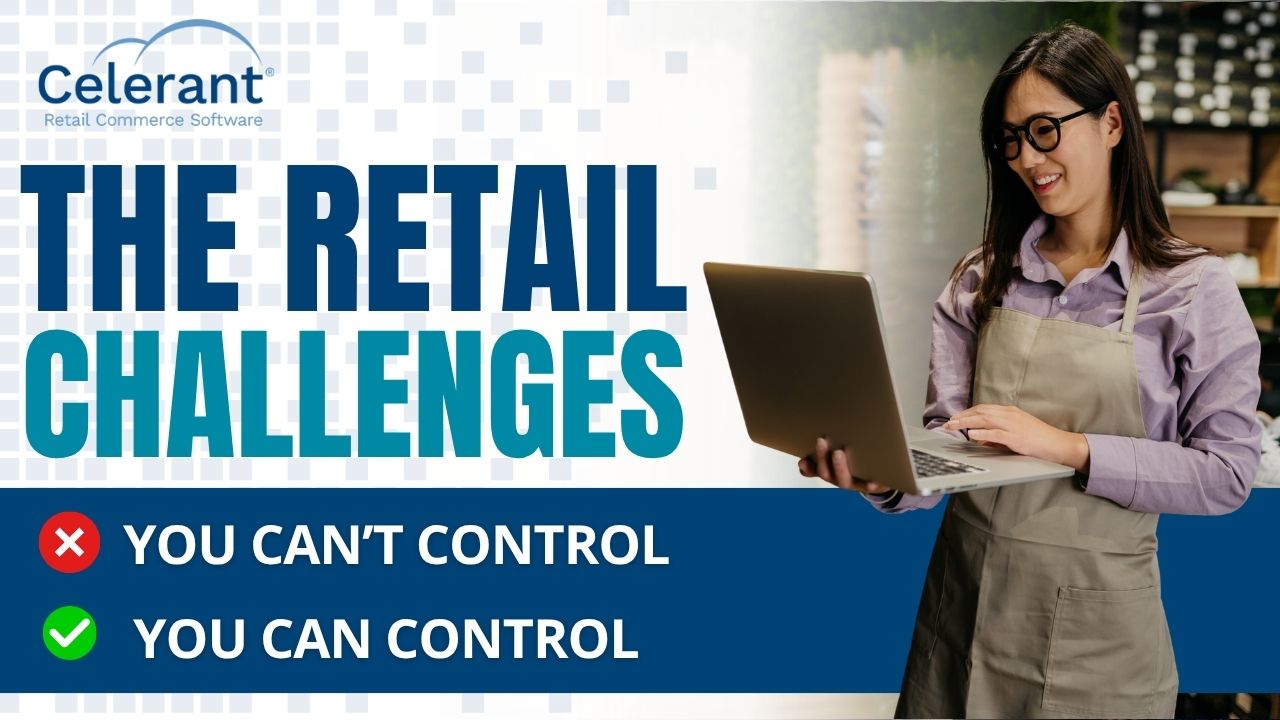
Economic uncertainty has affected businesses across every industry, and retailers are no exception. Rising supplier costs, changing tariffs, supply chain disruptions, shifting consumer demand, labor shortages, and increasing operating expenses are putting retailers under immense pressure. While these challenges may be beyond their control, retailers can focus on improving the operational aspects of their business to stay competitive during these difficult times.
In this blog, we’ll explore the retail challenges beyond your control—and the operational areas where you can take action to improve performance and build a more resilient business.
Although retailers of every size have been hit hard by external economic factors, it’s important to stay informed rather than let these challenges dictate every business decision.
#1. Inflation: Inflation disrupts almost every key aspect of retail operations, from supplier costs and transportation to utilities and wages.
Even when inflation begins to subside, many operating costs remain elevated, making it difficult for retailers to restore their profit margins.
As costs continue to rise, retailers face hard choices. They can either bear the brunt themselves by squeezing their profit margins or pass the additional costs on to customers who may already be spending more consciously.
Inflation may be out of your control, but how efficiently you operate isn’t.
#2. Changing Tariffs: Tariffs are an ongoing concern for most retailers in the US, especially those operating in the apparel, footwear, sporting goods, electronics, and other consumer goods industries. Changing trade policies increases landed costs without warning, forcing retailers to adjust price structures, supplier relationships, and purchase decisions.
While individual retailers can’t influence government tariff policies, they can improve their retail operations through accurate inventory data, supplier insights, and real-time reporting to make well-informed purchasing decisions.
#3. Supply Chain Disruptions: Though supply chains have improved since the COVID-19 pandemic, disruptions continue to affect retailers. Shipping delays, supplier shortages, transportation issues, and inconsistent delivery timelines make inventory planning difficult. When products arrive later than expected, forecasting customer demand also becomes a real challenge.
Without real-time visibility into inventory and sales, retailers risk both stockouts and excess inventory. This not only affects customer experience but also ties up valuable capital and reduces profitability.
#4. Shifting Consumer Confidence: Customers are the most affected by the uncertain economic conditions. Due to inflation, they become even more conscious, delaying discretionary purchases, comparing prices across different stores, and looking for greater value before making a purchase.
While retailers can’t directly influence consumer confidence, they can deliver seamless shopping experiences, ensuring convenience, trust, and loyalty.
#5. Rising Operating Costs: In addition to the higher inventory costs, retailers have to manage their rents, utilities, insurance, software subscriptions, shipping, and employee salaries. In order to improve their profit margins, a simple increase in prices isn’t the answer. It involves operational efficiency to maximize the value of every dollar invested.
#6. Labor Shortages: Labor shortages become even more challenging during periods of rising operating costs. Retailers may have to increase wages or add more benefits to retain employees. When a business has a smaller workforce, the existing employees have to juggle multiple responsibilities, from assisting customers and managing inventory to fulfilling online orders.
When employees spend more time on administrative tasks, they have less time and focus for delivering exceptional customer service.
While government policies and inflation-driven costs are beyond retailers’ control, there are still operational aspects that can drive profitable outcomes when properly focused. That’s where a retail management solution helps retailers. It enables them to enhance operational areas, improving efficiency and long-term business growth. These are the areas where retailers can make the greatest impact.
#1. Inventory Accuracy
Inventory is one of the largest investments for most retailers. Without accurate inventory data, it’s difficult to know which products are best sellers, which are slow movers, and when to replenish stock. A modern retail software solution provides real-time visibility into inventory across every sales channel, including physical stores, warehouses, eCommerce websites, and online marketplaces. With accurate and up-to-date inventory data, retailers can:
Accurate inventory data provides the foundation for making smarter business decisions, optimizing cash flow, and meeting shifting customer demands.
#2. Customer Retention
Retaining existing customers is more cost-effective than continuously acquiring new ones. This is where retailers offering loyalty programs and personalized marketing enjoy higher customer retention and repeat sales.
You can do the same by integrating your retail software with the right CRM to offer loyalty rewards and incentives on repeat purchases. This would turn one-time shoppers into lifetime buyers across every sales channel.
#3. Staff Productivity
You don’t need to compromise on work efficiency even when facing labor shortages. Instead of having your staff handle operational tasks manually, automate them with all-in-one retail software. This will streamline inventory updates, reports, promotions, and order fulfillment, enabling staff to focus on delivering an exceptional customer service.
#4. Purchasing Decisions
Ordering too little or too much inventory leads to problems. One ties up cash, and the other causes missed sales. That’s where accurate, real-time data can play a vital role. With the help of retail analytics, retailers access historical sales, figure out seasonal demand, supplier performance, and inventory turnover to make smarter purchasing decisions. This saves them from unnecessary spending while improving cash flow and profit margins.
#5. Reporting and Business Intelligence
Successful retail isn’t based on assumptions; it is backed by accurate data. With the help of modern reporting analytics, retailers gain access to key aspects of business operations, such as:
Real-time retail analytics enable retailers to identify trends early on during the retail process before they turn into larger, expensive problems.
#6. Marketing Strategy
Every dollar counts in an uncertain economic situation. Instead of investing marketing dollars in sending generic promotional emails and messages to every customer, retailers can craft a personalized marketing campaign using customer data to deliver targeted campaigns based on purchase history, shopping interests, and loyalty status.
Doing so increases customer engagement, repeat sales, and your ROI. You can also run promotional offers across all sales channels, including physical stores, website, email campaigns, and social platforms, to deliver a consistent customer experience.

Economic volatility is an unavoidable part of running a business, but getting bogged down by it is a choice. Surviving unpredictable markets requires a lean, agile operation that eliminates waste and maximizes every single dollar invested.
You cannot fix the economy, but you can fix your retail software.
Celerant provides a unified, all-in-one retail platform that brings your POS, multi-channel inventory management, CRM, and advanced analytics into one dashboard. By eliminating manual gaps, reducing administrative errors, and providing clear data, Celerant gives you the tools to keep your business stable, profitable, and growing, no matter what happens in the wider market.