Blog
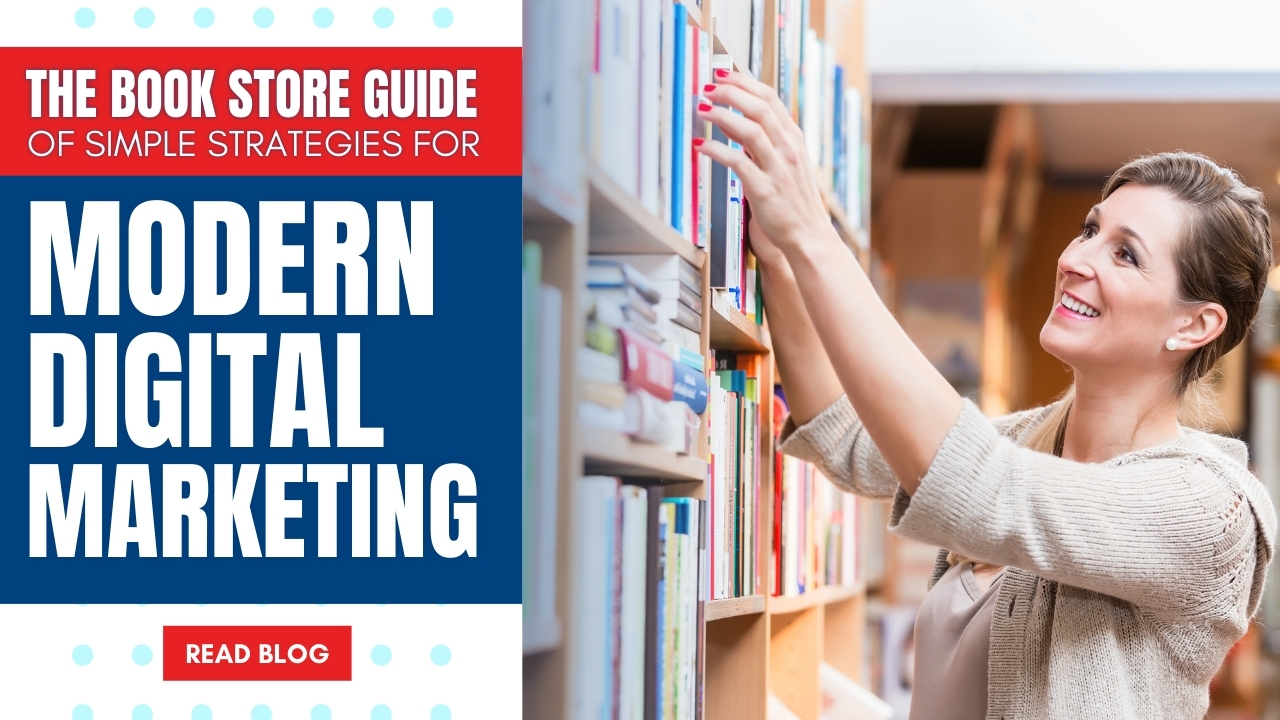
The Book Store Guide of Simple Strategies for Modern Digital Marketing
March 17, 2026 / 9 minute read / By Nick Borowitz
Blog
A well-loved independent bookshop offers an irreplaceable experience: the scent of paper and ink, personalized staff recommendations, and a loyal community that returns time and again.
However, loyalty alone is not enough when customers can order the same book from a major online retailer with just a few clicks and receive it the next day.
The good news is that you do not need a marketing department or dedicated technology team to compete. Digital marketing tactics that level the playing field are simpler than most book sellers realize. With the right retail system, these strategies can operate with minimal effort.
This guide outlines key strategies your bookshop can implement immediately, without requiring significant changes or sacrificing what makes your store unique.
Most small-town bookshops are built on personalized relationships and personalized service, where customers know the names of every staff member.
But that same philosophy can easily become a complacent liability when it extends into the back office. Paper customer lists, manually typed newsletters, hand-stamped loyalty cards, and separate spreadsheets for tracking promotions are charming in spirit.
Here in reality, though? They leave valid data sitting idle when it could be working for you every single day.
The shift away from the classic analog habits doesn’t mean abandoning what makes a bookshop special. It means business owners need to equip their businesses with digital tools that let the data they’re already collecting do more of the heavy lifting.
The result? Staff can stay focused on customers in front of them while the system handles marketing in the background.
Search engine optimization (SEO) is one of the most cost-effective ways a bookshop can get discovered online, and a significant portion of it costs nothing but time. The term can sound technical, but in practice, SEO is simply about making sure that when someone nearby searches for a book, a genre, or a local bookstore, your shop shows up.
Four distinct types of SEO work together to make that happen
| SEO Type | What It Does | How It Helps | Quick Wins |
|---|---|---|---|
| Local SEO | Optimizes your presence in location-based searches and Google Maps results. | Puts your shop in front of nearby readers searching 'bookstore near me' or 'used books [city]. | Claim and fully complete your Google Business Profile with hours, photos, and categories. |
| On-Page SEO | Optimizes the content, headings, and metadata on each page of your website. | Helps search engines understand what your store sells and match it to relevant searches. | Add genre keywords and staff pick descriptions to your website's product and category pages. |
| Technical SEO | Improves site speed, mobile-friendliness, and crawlability for search engines. | A slow or broken mobile site loses both rankings and sales — especially from smartphone shoppers. | Run a free Google PageSpeed Insights test and address the top flagged issues on your homepage. |
| Off-Page SEO | Builds your store's authority through external links, reviews, and social signals. | Positive Google reviews and local press mentions signal credibility and improve your ranking position. | Ask loyal customers to leave a Google review; a short, sincere ask at checkout goes a long way. |
What makes SEO especially valuable for independent bookshops is that local authenticity is something the major online retailers really cannot replicate.
A well-maintained Google Business Profile, an eCommerce website that reflects personality, and a handful of glowing customer reviews make your shop visible in local search over national chains. Consistency and relevance are the two factors that drive the best long-term SEO results. Those two factors are well within reach for any-sized small bookshop team.

Email marketing consistently delivers one of the highest returns on investment of any digital channel, and it is particularly well-suited to the kind of personalized, relationship-driven experience that booksellers excel at. When you integrate your email marketing with the POS and customer data, it stops being a newsletter and becomes a direct conversation with readers.
The secret? Segmentation. A customer who’s always buying fiction should receive totally different communications from someone who shops primarily in the children’s section.
Sending the right message increases the likelihood that people open it, click through, and return to your store. As Celerant’s email marketing tools show, personalized email campaigns can deliver transaction rates up to 6 times higher than generic messaging. This personalization represents a significant advantage for stores operating on tight margins.
One of the most overlooked yet impactful approaches is event-based (automated-trigger) email campaigns. These automated messages are tied to specific customer moments rather than a fixed schedule. Once set up in a unified retail system, they run without manual intervention and feel personal to the recipient.
Consider building automations around the following triggers:
Each of these moments keeps your bookshop present in a customer’s life between visits — and does so in a way that feels thoughtful and relevant rather than intrusive.
The majority of your customers are on their phones right now. For millennial and Gen Z readers, the whole shopping journey often takes place on a mobile device, from learning of a new title to the purchase button. That reality has two implications for bookshops: your website must work seamlessly on mobile devices, and your marketing content must be designed for small screens.
Authentic content consistently outperforms polished advertising in this space. For example, a photo of a new arrival with a hand-lettered staff note will typically generate more engagement than any sponsored post. A behind-the-scenes look at how you arrange a new display sparks more interest than paid content. Independent bookshops have an advantage because warmth and personality drive performance that major retailers cannot manufacture.
The goal isn’t constant posting; it’s to post with meaning. Consistency builds an audience over time, and every piece of content should connect back to a seamless mobile browsing & shopping experience. If a reader taps through from an Instagram post to your website and the page is slow or hard to navigate on their phone, that sale is reliably gone. Optimizing the mobile experience is foundational to everything else.
These tools become far more powerful when they draw from a single shared data source. SEO brings new readers to your site.
Email automation keeps your audience engaged. Social media expands your reach. Loyalty programs reward repeat visits. Customer segmentation helps you speak to the right readers at the right time.
Many bookshops still rely on a mix of disconnected systems; it’s just something bookshops of the analog spirit tend to do. A standalone POS sits next to an email platform that cannot see in‑store purchases. No mobile shopping application has ever been considered. The website runs independently and doesn’t share browsing behavior.
This setup scatters data across points. It also forces the owner or manager to handle tasks that a unified system would complete automatically. Fragmented data leads to missed opportunities. A customer who buys a mystery novel in-store may receive an email about children’s books because the systems never exchange information.
Campaigns improve with every interaction because each action feeds the next and helps the system learn what your customers respond to.
Staff gain a clear view of buying patterns, which helps them hand-sell the best titles, plan events aligned with local interests, and build displays that reflect current trends.
Inventory decisions become more accurate because unified data highlights which genres and authors move quickly across all channels.
Customer relationships grow stronger as readers experience consistent and relevant communication both online and in-store.
Operational friction fades because the team no longer juggles multiple logins, exports, or spreadsheets.
When your POS, eCommerce site, email tools, and loyalty program share the same real-time customer data, running the business becomes easier and more effective. An in-store purchase updates the customer’s segment right away. A reader’s birthday triggers a personalized offer without any manual work. Website browsing behavior shapes the email they receive next. The system keeps everything in sync while your team focuses on the floor.
Integration isn’t limited to enterprise retailers with huge budgets. Platforms like Celerant’s digital marketing suite give bookshops access to the same connected capabilities without added complexity or overhead. For a shop operating on tight margins, the efficiency gains alone can drive measurable revenue growth.
The independent bookshop’s most significant competitive asset is its relationship with its community. Digital marketing, done thoughtfully, extends that relationship beyond the four walls of the store.
None of these strategies requires a marketing background or a technology team. What they do need is the right system in place: one that connects your sales data, customer records, and marketing tools so that each informs the others.
When that foundation is in place, the tactics in this guide stop being to-do list items and start running on their own. For bookshops ready to move past the analog approach without losing what makes them irreplaceable, that’s the real starting point: a retail system that lets you manage every business aspect from one central place.