Blog
Why Retailers Need Retail Software: Key Benefits Explained
August 21, 2026 / 10+ minute read / By Muneeza Shahid
General
Blog
Modern retail is more complex than ever, yet retailers choose separate systems to manage key operations, including inventory, eCommerce, customer insights, and order fulfillment. These disconnected systems create inefficiencies, inaccuracies, and poor customer experience as businesses grow.
A unified retail solution bridges the gap between disparate retail systems, synchronizing inventory, sales, customer information, and order fulfillment in real-time. However, to fully understand its value to a business, you first need to understand the limitations of traditional retail systems and why they no longer meet the demands of modern retailers.
In this guide, we’ll cover the five ways to protect retail margins without raising prices:
Traditional retail systems worked great when shopping was limited to a single channel, but customers now shop across multiple channels. Harvard Business Review research also found 73% of consumers use multiple sales channels for shopping, including both digital and physical platforms, before making a purchase.
For example, they may search for a product online using social media platforms. Then they visit the store to check it in person before finalizing a purchase. Or they may simply proceed to place an order for home delivery via the store’s official website or even online marketplaces.
This shift in the customer shopping journey is not how retailers have traditionally managed their day-to-day retail operations, including inventory, customer data, POS and sales. When the information flows between all these independently functioning systems, retailers face various issues such as:
Similarly, when retailers can’t have real-time access to customer purchase history and buying preferences, they can’t run personalized shopping campaigns to ensure a better customer experience. These disconnected procedures become even more difficult to manage when a business expands across multiple locations and sales channels, limiting its ability to scale in the long-term. This is why switching to a reliable unified retail solution is one of the most effective ways to support business growth.

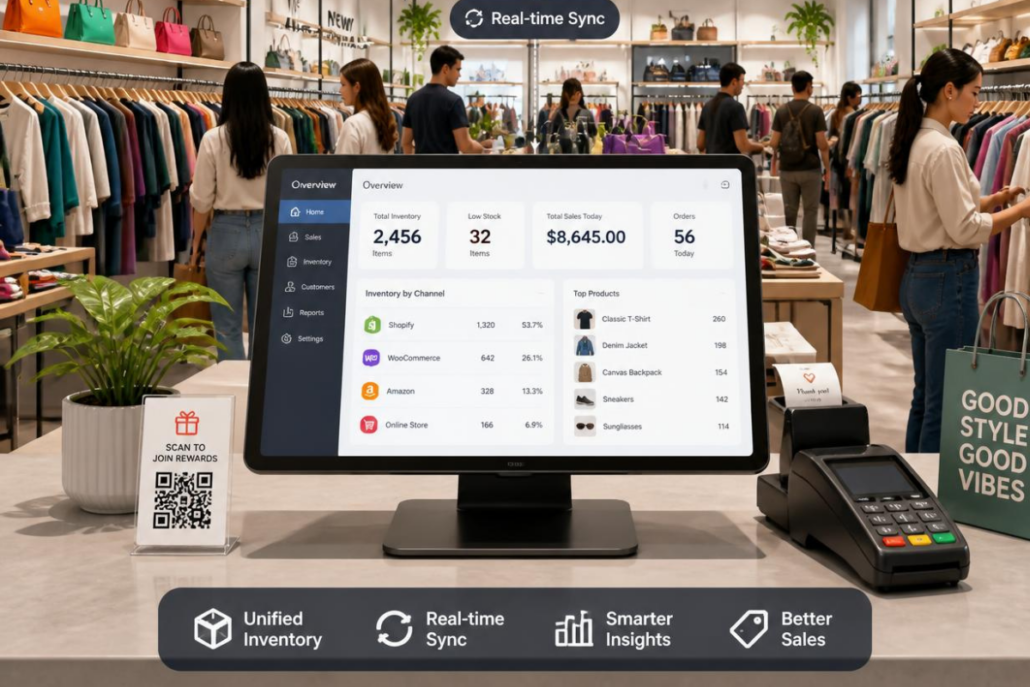
Unified retail software is a comprehensive tool that helps retailers manage key business operations through a single platform. It centralizes important retail operations, including inventory, customer data, sales, and order management, to create a single source of truth across a business in real-time. Depending on the retailer’s needs, it includes:
When all these systems work in synchronization, retailers can overcome the limitations of a traditional retail system.
Related Blog: How Much Does a New Retail Software System Cost?
Retail software enables business owners to streamline day-to-day retail operations, enhance inventory visibility, and make smart business decisions through real-time insights. Here are key benefits explaining why retailers need to invest in an omnichannel retail solution for long-term business growth:
Managing information across multiple systems is a key concern for most retailers. However, disconnected systems create fragmented and inaccurate data, forcing staff to spend valuable time on administrative tasks, such as maintaining spreadsheets, reconciling inventory, and verifying customer data, instead of serving customers and fulfilling orders.
Retail software solves all these issues by centralizing business data within a single platform to give a unified view of:
This also helps businesses with operational visibility, allowing their team to make quick and informed business decisions.
Inventory visibility is a core component of retail businesses, especially those operating in an omnichannel environment. Yet, inaccurate inventory records are one of the primary causes behind lost sales, order fulfillment issues, and unsatisfied customers. When inventory operates independently, it leads to multiple stock issues, including excess stock, stockouts, and disappointed customers.
With retail software, you can synchronize inventory in real-time across all your sales channels. This includes physical stores, warehouses, eCommerce sites, and online marketplaces. It also updates stock levels across all connected touchpoints for every transaction. All of this can help reduce excess inventory, oversells, and order fulfillment issues.
Customers expect a flexible shopping experience when browsing in-store or online through a website or a marketplace. Meeting those expectations requires retailers to have real-time visibility into inventory, orders, and customer data across every sales channel.
Retail software connects all the sales channels within a single platform from:
When the sales channels are connected, retailers can ensure a seamless shopping experience for customers, regardless of where they browse, purchase, or choose to receive their orders.
Research also shows that omnichannel shoppers spend about 1.5 times more per month than single-channel customers. This highlights the value of an omnichannel strategy, as it not only offers a seamless shopping experience but also improves customer loyalty, lifetime value, and revenue potential.
Related Blog: 10 Reasons Why You Need an Omnichannel Retail Solution

Customers increasingly expect retailers to recommend relevant products based on their preferences and purchase history. A retail solution ensures a personalized shopping experience through centralized customer information, including:
This helps retailers to run personalized promotions and marketing campaigns, share product recommendations, and loyalty rewards, which not only improve the customer experience but also encourage repeat purchases.
Despite the complex retail operations, most retailers still use manual processes. These include spreadsheets and paper records to manage inventory, purchase orders, customer returns, loyalty programs, and sales reporting. This not only wastes your staff’s precious time and effort, but also increases the risk of human errors.
Automating routine tasks through a retail solution reduces administrative work and helps your staff focus on high-value retail operations, including customer service, order fulfillment, and sales. This also increases productivity while reducing human error.
Most retailers make decisions based on guesswork instead of real facts due to a lack of visibility into retail data. By using retail analytics, businesses like you can track key retail metrics, such as:
These insights help retailers like you identify better sales opportunities, including profitable products to scale marketing campaigns across the most in-demand sales channels for a better ROI. It also removes guesswork from marketing, allowing retailers to make informed decisions based on factual and real-time data.
As retailers expand into new sales channels, locations, and product categories, the disconnected systems become increasingly difficult to manage. For example, retailers need to manage store locations, hire employees, expand fulfillment capabilities, and fulfill the increased reporting requirements. These changes can stress the disconnected systems, particularly if they aren’t scalable.
Retail software provides the required scalable foundation by centralizing everything from inventory, sales, customers, and retail operations. This helps retailers to scale into multiple locations without a dip in their business performance.
Every investment you make should contribute to your revenue, and retail software allows you to achieve that goal. It helps in reducing inventory costs and stockouts, which leads to an increased inventory turnover. You also get to improve customer retention rates, leading to an increase in overall sales and business revenue.
Although the benefits of retail software are clear, many retailers still don’t realize how much their existing, outdated systems are holding them back.
Outdated systems cause issues related to productivity, customer service, and profitability. Here are a few telltale signs that a business has outgrown its current retail system:
These issues clearly indicate that the existing systems are no longer fit for handling increased administrative and operational workload.
Modern retail is more than just processing orders and sales transactions. Retailers have to manage inventory across multiple channels, deliver personalized customer experiences, support omnichannel fulfillment, and make informed decisions based on real-time data.
Unified retail software combines critical retail functions within a single system, ensuring store owners have the operational efficiency, inventory visibility, and scalability they need for long-term growth. Celerant’s unified retail software is one great example of such a system, exclusively designed to centralize key retail operations, including inventory management, customer data, sales, and order fulfillment.
This not only streamlines retail operations but also delivers a better customer experience while driving sustainable business growth.